
At Helping Solutions, we understand that disability doesn’t just disappear when you turn 65.
Helping Solutions makes accessing the Support at Home Program simple, personal, and welcoming for older adults from all walks of life. We focus on removing barriers and making it easy to get the right support at home, whether you’ve lived Australia your whole life or have come from somewhere else.
If you’re wondering how to transition from the NDIS into support at home, or you’ve recently acquired a disability since turning 65, we can help those in Perth Metro, Regional WA and Melbourne VIC to navigate the process while offering the same high standard of care in both regions, so no one misses out.
Contact us today to learn how you can receive supports that meet your unique, individual needs and cultural preferences.

About Disability Care
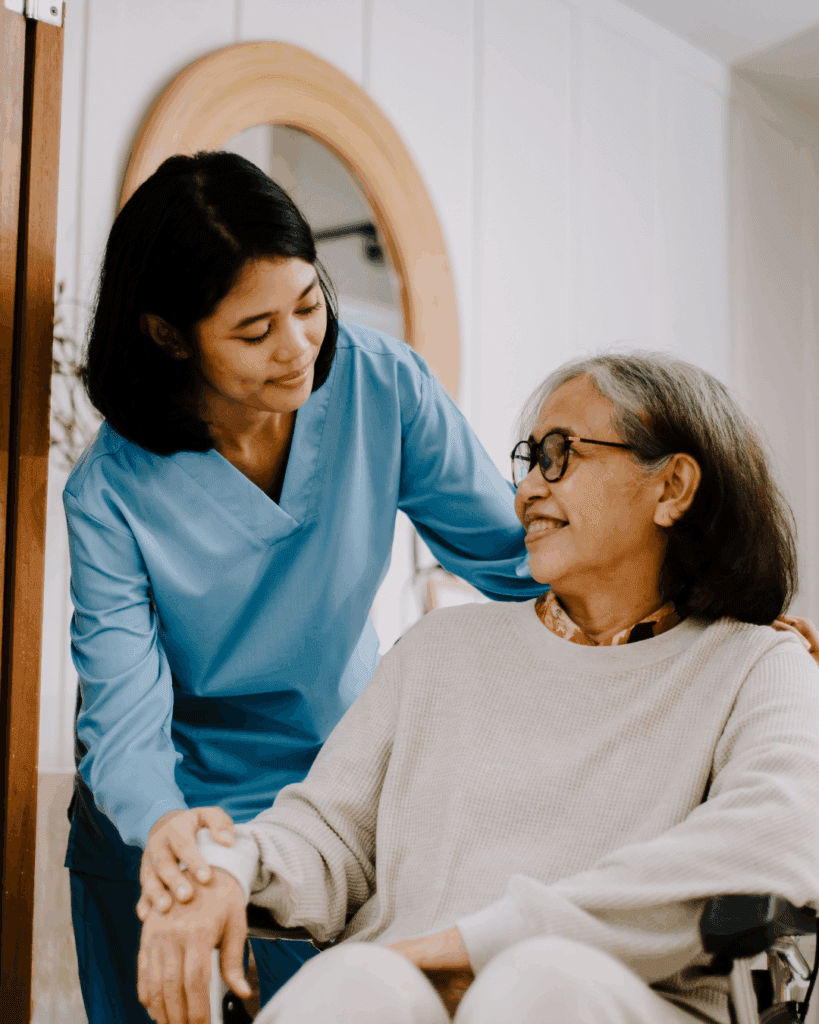
Disability Care for older people depends on your individual goals and requirements for care. But with our in-house nursing team providing health care and guidance, you’ll receive reliable help with daily living and routine medical needs, all in one place.
So, no matter whether you need mobility support and assistance with daily living activities, clinical nursing needs, or want to stay connected with your community, our dedicated and highly trained carers can support you.
Like support at home, Disability Care is not a one-size-fits-all approach—we will tailor your care to your preferences, the way you like to do things, and the things you want to be able to do each day.
Have questions about Disability Care services? Get in touch with our friendly team today to learn more:
Helping Solutions can support you with:
- Personal Care
- Domestic Assistance
- Respite
- Shopping Assistance
- Social Support
- Transport
- Hospital to Home Support
- Community Nursing services
- Occupational Therapy assessments and services
- Support Coordination
In addition, we offer Community Nursing and High Care services which includes assistance with:
Community Nursing
- Comprehensive health assessments
- Wound care and head-to-toe assessments
- Post-hospital discharge check and care plan compilation
- Nursing reports and care plan review
- Training and competency assessment for staff
- Bladder management SPC change
High Care
- Complex bowel care
- Enteral feeding support and PEG rig
- Dysphasia support and mealtime management plans
- Stoma support
- Ventilator and tracheostomy support
- Urinary catheter support (including suprapubic catheter)
- IV drug administration and subcutaneous injections
- Medication management including Schedule 8 drugs
- Palliative end-of-life care
- Complex wound care
Our carers are trained by our highly experienced, in-house Registered Nursing Team and must pass at least 13 medical competency assessments before they can assist with health needs.
From the safe manual handling to administration of medication, to knowing how to assist with more advanced medical conditions like dementia, dysphagia and palliative care needs, our team provides personalised and tailored support that ensures the care needs of each individual.
How to access home care services (Support at Home Program)
Eligibility depends on a number of factors.
If you’ve
- noticed a change,
- been recently diagnosed with a condition, or
- have experienced a change in family care arrangements
and
- are above the age of 65 (50 years or older for Aboriginal or Torres Strait Islander people)
…then the first step to apply for an assessment (for more information, visit My Aged Care).
Once you receive your assessment result:
If you are eligible for supports, you can then contact us to enquire about our home care services and learn more about what we can support you with.
Ready to start receiving Disability Care services? Get in touch with our friendly team today to learn more:
Services are delivered in compliance with the Aged Care Quality Standards and under the guidance of our associated governance partner—for more details, click here.