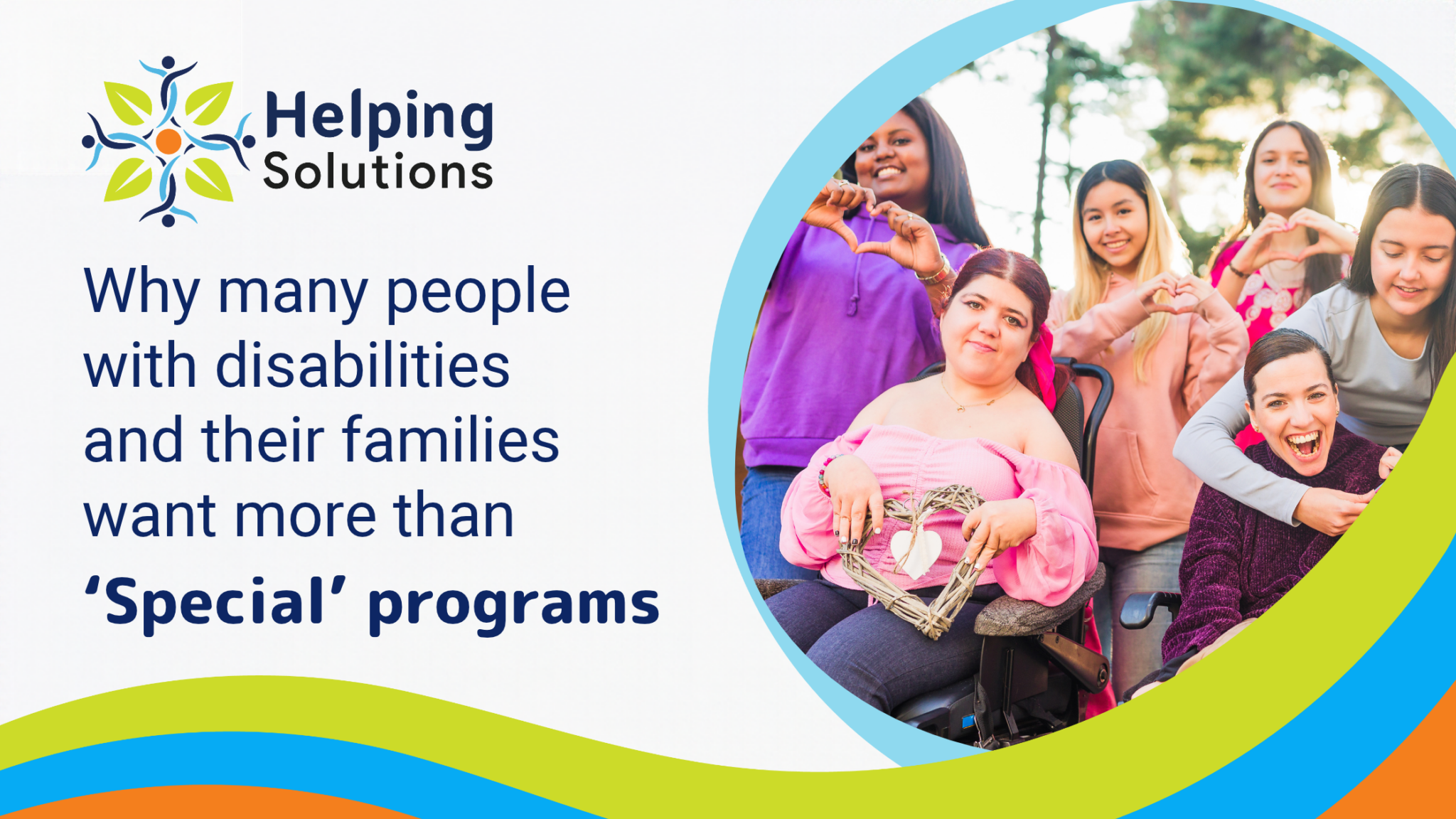
As a disability service provider in Perth, Western Australia, we are often asked, ‘what programs do you offer people with disabilities?’
For a while we were organising arts, craft and physical activity programs for our participants. Things like watercolours, mosaics, Zumba classes, and more.
While Helping Solutions doesn’t have any current organised programs, what we do have is a strong team of Support Workers helping our participants get out to the community to participate in the activities they choose.
Usually these program and activities that our participants chose are not just organised programs for people with disabilities. They are designed for community and people of many different walks of life to attend.
Recently, I listened to an interview with Paralympic gold medallist and disability advocate Ezra Frech. His story of growing up with a limb difference, competing at the highest levels of sport and challenging perceptions of disability left me reflecting on my own family’s experiences with inclusion. https://www.jayshetty.me/podcast/ezra-frech-i-was-put-on-this-earth-to-change-the-way-we-see-disability
As a parent of two autistic boys and someone who works in the disability sector, one particular thought stayed with me long after the podcast ended. Why do so many families of people with disabilities want more than ‘special’ programs?
Why some people struggle with the word ‘special’
Many people within the disability community have expressed discomfort with terms such as “special needs” because they can feel patronising, segregating or as though we are avoiding having open conversations about disability. Research exploring disability stigma, belonging and identity suggests that language can influence how people experience inclusion within their communities.
“…recent findings from the IDD literature demonstrate that interventions aimed simply at service access or attendance and increasing social networks are insufficient, and we need to look beyond mere ‘acceptance’ as the end goal.” [Stigma, Acceptance and Belonging for People with IDD Across Cultures]
Barriers to inclusion
Most families are not looking for a separate world built exclusively for people with disabilities. But sometimes the barriers to entry into ‘normal’ parts of society are so hefty, the worlds separate by simple lack of access.
Families are looking for support that helps their loved ones participate in the same world as everyone else.
They, generally speaking, want their children to play sport, attend birthday parties, join community groups, make friends, learn new skills and be seen for who they are rather than what diagnosis they have.
The goal has always been, belonging.
Disability inclusion is not about creating more separate spaces. It is about creating more welcoming spaces.
Sometimes specialist supports are essential and absolutely the right fit. But wherever possible, families want opportunities that build connection, participation and belonging within the broader community.
That’s not a request for special treatment.
It’s simply a request to be included.
Helping Solutions is looking at ways to bring back our organised programs in a way that would better reflect the community needs and wants, with inclusivity at the forefront of it all, but at present, most of our participants have activities they plan themselves in their communities and with people they chose. We encourage and celebrate their individual interests and they can be significantly varied. One participant loves to attend openings of things. It could be a new park, movie premiere or even just a new corner store! Another plays badminton in an open tournament, and we also have several artists and musicians in our mix as well.
If you are looking for any particular activities that don’t appear to be well represented in your community, please reach out to Vikki – Programs and Communications Manager ([email protected])
This article was inspired by a personal reflection written by Vikki Giles after listening to an interview with Paralympic athlete and disability advocate Ezra Frech. Readers interested in the full personal story can read her original blog post and learn more about her book, Understand Me: Autism in Early Childhood and the Fight for Inclusion.